PART 1 — “DAD SAID WE’RE MOVING IN”
At 11:03 p.m., Claire Bennett pushed through my front door without knocking.
Her husband, Evan, followed with two oversized suitcases.
Claire carried a third bag over one shoulder as though she had just arrived at a hotel that had misplaced the bellman.
I was standing in the hallway in my robe.
“Claire?”
“Dad said we’re moving in.”
No hello.
No explanation.
No question.
Just an announcement.
She stepped past me.
Evan gave me an apologetic little nod.
“Sorry it’s late.”
Richard appeared halfway down the stairs.
The expression on his face told me everything I needed to know.
He had told Claire something.
He had not told me.
Claire looked around the foyer.
“We’ll take the upstairs guest suite.”
I turned toward Richard.
“Will you?”
He opened his mouth.
“Sweetheart, I was going to explain—”
Claire interrupted him.
“It’s temporary.”
She set her bag down.
“Maybe six months.”
I stared at her.
“Six months?”
“The lease increase at our building is ridiculous.”
Evan said quietly:
“We’re also trying to save for a house.”
Claire shot him a look.
“Yes, Evan. That too.”
Then she reached into her handbag.
“I made something so there won’t be confusion.”
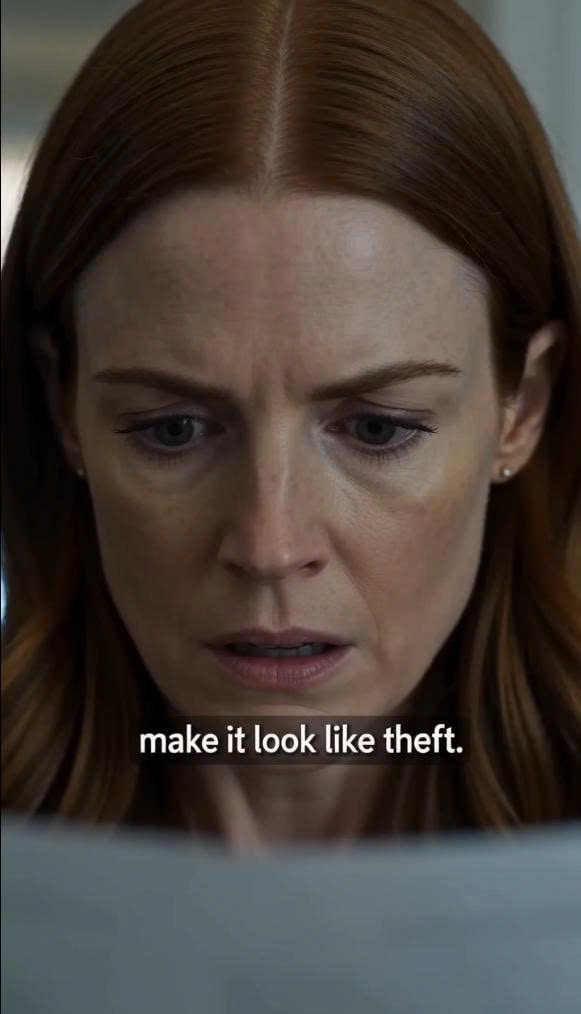
She handed me a sheet of paper.
Typed.
Printed.
Bullet points.
For several seconds I genuinely thought it was some kind of moving schedule.
Then I read the first line.
BREAKFAST — 6:00 A.M. SHARP. NO GREASY FOOD.
Next:
BED LINENS — FRESH SHEETS EVERY MONDAY.
Then:
PRIMARY GUEST BATH — CLEAN NIGHTLY.
DELICATES — HAND WASH ONLY.
NO OUTSIDE HOUSEKEEPERS. I DON’T LIKE STRANGERS HANDLING MY CLOTHES.
I looked up.
“What is this?”
“Our routine.”
“Our?”
Claire smiled.
“You’re home most of the day.”
Technically true.
I worked partly from home.
That did not make me household staff.
She tapped the list.
“I’m really particular about breakfast.”
Evan muttered:
“Claire, maybe this is a conversation for tomorrow.”
“No. Better to be clear.”
Then she looked directly at me.
“Besides, Nora lives off Dad. The least she can do is earn her keep.”
The foyer became completely silent.
Richard closed his eyes.
Evan looked horrified.
I waited.
I wanted Richard to say something.
Anything.
That is my wife.
That is her home.
You will not speak to her that way.
Instead he said:
“Claire…”
Not a correction.
A warning about tone.
Nothing more.
So I folded the chore list.
Placed it in my robe pocket.
And smiled.
“Breakfast at six?”
Claire seemed pleased.
“Exactly.”
“Okay.”
I turned toward the stairs.
“Don’t be late.”
PART 2 — BREAKFAST
At 5:12 the next morning, I made three phone calls.
The first was to Susan Kaplan, my attorney.
The second was to the private storage company where I kept my original property files.
The third was to my sister, who told me I sounded strangely calm.
“I am calm,” I said.
“That’s usually when people should worry.”
She knew me well.
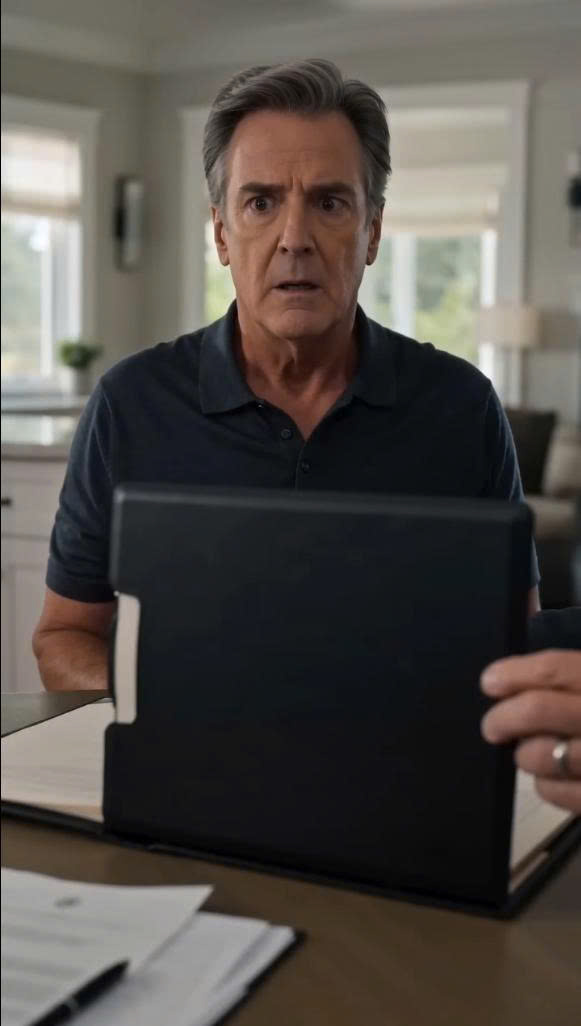
At 5:54, Susan arrived carrying a leather folder.
At 5:58, Richard came into the kitchen looking as though he had not slept.
At exactly 6:00, Claire entered wearing a silk robe.
She stopped.
No pancakes.
No coffee service.
No folded napkin.
No breakfast.
Instead, Richard sat at the table.
Susan sat beside him.
I stood near the counter.
And Claire’s two largest suitcases were positioned upright near the front door.
“What is this?”
I placed her chore list in the middle of the table.
“You wanted to discuss who earns their keep in this house.”
Claire stared.
“So I thought we should start with who owns it.”
Susan opened the folder.
She slid a certified copy of the deed across the table.
Claire barely glanced at it.
“Dad owns the house.”
“No.”
She looked at me.
“I purchased it four years before I married Richard.”
Claire laughed.
“That’s ridiculous.”
Susan spoke for the first time.
“The deed is clear.”
Claire looked at Richard.
“Tell her.”
Richard rubbed his forehead.
“Claire, I should’ve explained—”
“Explained what?”
“That the house belongs to Nora.”
Claire’s face changed.
Not embarrassment.
Confusion.
As if reality had violated an agreement.
“But you said this house would be mine someday.”
Everything inside me went still.
I turned toward my husband.
“She said what?”
Richard didn’t answer.
Claire stared at him.
“You said when you were gone I’d always have this house.”
“Claire—”
“You said it.”
His silence lasted three seconds too long.
That was enough.
I looked at him.
“When?”
Richard stood.
“Nora, please.”
“When did you tell your daughter she would inherit my house?”
“It wasn’t like that.”
Claire laughed bitterly.
“That is exactly what you said.”
Evan had entered the doorway behind her.
He looked from Claire to Richard.
Then to me.
Nobody spoke.
Claire pointed at the deed.
“You really think a piece of paper means more than family?”
I pushed it gently back toward her.
“No.”
I looked at Richard.
“But I’m beginning to think your father has been making promises with things that don’t belong to him.”
PART 3 — HOW THE HOUSE BECAME MINE
I bought the house when I was forty-seven.
Before Richard.
Before Claire became my stepdaughter.
Before anyone in his family knew my name.
My first husband, Paul, had died six years earlier.
Not suddenly.
Cancer gave us eighteen months to understand exactly what we were losing.
After his death, I sold the small home we had shared because every room felt like a museum.
I spent two years rebuilding my life.
I worked.
Saved.
Invested.
Then I purchased the house in my own name.
No mortgage by the time I met Richard.
No family money.
No inheritance from him.
Mine.
When Richard and I married, he moved in.
He contributed to utilities.
Groceries.
Travel.
Some renovations.
But the property remained separately titled.
Not because I distrusted him.
Because we had both entered the marriage in our fifties with adult children, prior assets and established financial lives.
Richard even agreed that keeping major premarital property separate was sensible.
At least, that was what I thought.
Claire knew almost none of this.
Why would she?
Richard apparently preferred a different story.
A story where her father had provided everything.
And I was simply the woman enjoying it.
That explained the chore list.
The sneer.
“You live off him.”
Claire hadn’t invented that belief in a vacuum.
Someone had fed it.
PART 4 — THE SECOND FOLDER
Claire crossed her arms.
“So what now? You’re throwing us onto the street?”
“No.”
I looked toward Evan.
“You have your apartment until the end of the month?”
He nodded.
“Our lease is still active for three weeks.”
“Then nobody is homeless.”
Claire snapped:
“We gave notice because Dad told us to.”
I turned again.
“Richard?”
He sighed.
“I told them they could stay here while they saved.”
“For six months?”
“Maybe.”
“You never asked me.”
“I thought you’d agree.”
“That isn’t asking.”
Claire muttered:
“Because you make everything about control.”
Susan glanced at me.
I nodded.
She opened the second folder.
Richard immediately looked nervous.
That interested me.
“What is that?” he asked.
Susan answered.
“Documents Nora asked me to review this morning.”
I slid one toward Richard.
It was our estate plan.
Or rather, the estate plan I believed we had.
My house was to remain mine.
If I died first, Richard had a limited right to occupy it for eighteen months.
After that, the property passed according to my will.
Most of my estate went to my niece, my late husband’s goddaughter, and several charitable organizations.
Richard had his own assets.
His own retirement accounts.
His own life insurance.
His own estate plan for Claire.
At least that was the arrangement.
I looked at him.
“When you told Claire she would always have this house, what exactly did you mean?”
Richard stared at the document.
“I meant she’d never be without somewhere to live.”
“That is not the same sentence.”
He looked up.
“I was trying to reassure her.”
“With my property?”
“Nora—”
“How?”
Claire stepped forward.
“Dad doesn’t need permission to help me.”
“He does if the help is mine.”
“That sounds incredibly selfish.”
I almost smiled.
“Your father owns a condo downtown.”
Claire went quiet.
Richard’s face changed.
“Why are you bringing that up?”
“Because if Claire needs somewhere to live, you own somewhere.”
His downtown condo had been rented out for years.
It generated income.
Claire knew about it.
She simply preferred my house.
Five bedrooms.
Large yard.
Better neighborhood.
No rent.
And apparently breakfast at six.
Claire looked at her father.
“You said the condo was part of your retirement plan.”
“It is.”
I nodded.
“Exactly.”
Richard understood.
He was willing to protect the asset that belonged to him.
My asset was easier to give away.
PART 5 — WHAT ELSE HAD HE PROMISED?
Susan had discovered something while reviewing our older files.
Three years earlier, Richard asked our financial adviser a question about adding Claire as a beneficiary to a home-related insurance policy.
The adviser correctly told him he could not change ownership rights in property he did not own.
At the time, Richard never mentioned the exchange.
Then there was an email.
Two years old.
Richard to Claire.
Susan printed it.
The subject line read:
YOUR FUTURE
Claire reached for it.
Richard said:
“Don’t.”
That single word made me colder than anything else that morning.
I picked up the page.
Richard had written:
You’ll never need to worry about housing. This place will stay in the family.
This place.
My house.
Farther down:
Nora has no children, so eventually it all becomes simpler anyway.
I read that sentence twice.
“No children.”
Richard stood.
“That came out wrong.”
“It was written.”
“I was trying to calm her down after she lost her job.”
“That was two years ago.”
“I know.”
“What exactly becomes simpler because I don’t have children?”
He didn’t answer.
Claire did.
“Obviously there’s nobody else who needs the house.”
Susan’s pen stopped moving.
I looked at Claire.
“So because I never gave birth, my property has no destination?”
“That’s not what I said.”
“It’s exactly what you said.”
Evan finally spoke.
“Claire…”
She turned on him.
“Stop.”
“No.”
It was the first firm thing he had said.
“This is getting insane.”
She stared at him.
He continued.
“You told me your dad owned the house.”
“He basically does.”
“No.”
Evan pointed toward the deed.
“He doesn’t.”
PART 6 — RICHARD’S VERSION
Claire went upstairs.
A door slammed.
Evan followed more slowly.
That left me, Richard and Susan.
Richard sat down.
“I never meant for this to happen.”
I looked at him.
“What did you expect?”
“I thought they’d stay.”
“That part I understand.”
“I thought you’d be annoyed for a day.”
“You moved two adults into my house without asking.”
“I was trying to help my daughter.”
“And then?”
He looked confused.
“Then what?”
“After six months.”
Silence.
“Richard, did you actually plan for them to leave?”
He rubbed both hands over his face.
“She and Evan can’t afford the kind of house they want.”
There it was.
Not any house.
The kind they wanted.
“And?”
“I thought if they stayed here for a while, maybe…”
“Maybe what?”
He looked toward Susan.
She closed her folder.
“I’ll give you privacy.”
“No.”
I stopped her.
“Stay.”
Richard looked humiliated.
For once, I was not interested in saving him from that feeling.
“Finish the sentence.”
He sighed.
“I thought eventually you might see how well it worked.”
“What worked?”
“All of us.”
I stared.
“You thought Claire and Evan would move in permanently.”
“I didn’t say permanently.”
“You promised her the house.”
“I promised she’d have security.”
“With my house.”
“Nora, you have to stop phrasing everything like I was stealing something.”
I leaned back.
“Then give me a better word.”
He couldn’t.
PART 7 — THE CHORE LIST RETURNS
At 7:10, Claire came back downstairs dressed for work.
She still held the chore sheet.
She placed it in front of me.
“So you’re upset about the list.”
“No.”
That surprised her.
“I’m offended by it.”
“That’s the same thing.”
“No. Being offended is temporary. What concerns me is what the list revealed.”
She crossed her arms.
“What did it reveal?”
“You arrived here believing the house belonged to your father.”
“It should.”
Susan looked up.
Claire corrected herself.
“I mean, he lives here.”
“So do I.”
She ignored that.
“You don’t even have a real job outside the house.”
I smiled.
There it was again.
Richard finally intervened.
“Claire, stop.”
She looked shocked.
“No, Dad. She keeps acting like she supports herself.”
I opened my laptop.
“Would you like to discuss finances?”
Richard immediately said:
“Nora.”
I looked at him.
“What?”
Claire laughed.
“This is ridiculous.”
“No. You said I live off your father.”
I rotated the screen.
My consulting company.
My retirement accounts.
My investment distributions.
The consulting income alone had exceeded Richard’s pension and rental income the previous year.
Claire stared.
I had never discussed my finances with her because normal adults didn’t need to justify their bank accounts at birthday dinners.
“I didn’t know,” she said.
“That is the point.”
She looked away.
“You didn’t know.”
I tapped the chore list.
“But you were comfortable humiliating me based on what you assumed.”
No answer.
“You walked into my home at eleven at night, assigned me domestic work, insulted me, and expected obedience.”
“I was joking.”
Evan laughed once from the doorway.
Nobody joined him.
Claire glared.
He raised his hands.
“Sorry. But no, you weren’t.”
PART 8 — THE BOUNDARY
I had spent the night deciding what I would do.
Not what would embarrass Claire.
Not what would punish Richard.
What would protect me.
I pushed an envelope toward Claire.
Inside was a list of nearby furnished rentals.
Three were within ten minutes.
“I’ll pay the application fee for one.”
She stared at me.
“You’re kicking us out.”
“You never moved in.”
“Our bags are upstairs.”
“You arrived seven hours ago.”
“Dad invited us.”
Richard spoke quietly.
“I had no right to do that.”
Claire turned toward him.
“Seriously?”
“Yes.”
“You told me—”
“I know what I told you.”
For the first time, he looked at me before continuing.
“I was wrong.”
Claire’s face crumpled with anger.
“So you’re choosing her.”
Richard looked older than he had the night before.
“No.”
He shook his head.
“I’m finally admitting that choosing for her is not the same as choosing you.”
That was the first sentence he said that morning that sounded like a husband.
It was also far too late to fix everything.
PART 9 — THE REAL ARGUMENT
Claire did not leave calmly.
She cried.
Then yelled.
Then accused me of separating her from her father.
Then accused Richard of becoming weak.
At one point she said:
“Mom would never have done this.”
Richard flinched.
Claire’s mother had died nine years earlier.
I never tried to replace her.
I certainly wasn’t going to compete with a dead woman.
“I’m sure your mother loved you very much,” I said.
Claire’s eyes filled.
“She understood family.”
“I hope she did.”
“You don’t.”
I nodded toward the deed.
“Family doesn’t mean automatic ownership.”
She stared.
“Family doesn’t mean I hand over whatever you want because your father married me.”
“That’s not what I want.”
“You arrived with a chore list.”
She had no answer.
Then something unexpected happened.
Evan picked up one of the suitcases.
Claire stared.
“What are you doing?”
“Going home.”
“We gave notice.”
“We still have three weeks.”
“We’re supposed to be here.”
“No.”
His voice was quiet.
“We were supposed to ask.”
She looked betrayed.
“You’re taking her side?”
“I’m taking the side where we don’t move into someone’s house without permission.”
He carried the suitcase outside.
Claire stood perfectly still.
Then she looked at Richard.
“Are you letting this happen?”
He swallowed.
“Yes.”
PART 10 — AFTER THE DOOR CLOSED
By 8:00, they were gone.
The house felt enormous.
Richard stood in the foyer staring at the closed door.
I went to my office.
He followed.
“Nora.”
“I have work.”
“We need to talk.”
“Yes.”
I sat down.
“So talk.”
He took the chair across from me.
“I messed up.”
“That’s broad.”
“I wanted Claire to feel secure.”
“I know.”
“After her mother died, I kept thinking I had to compensate.”
“For nine years?”
He lowered his eyes.
“Maybe.”
I waited.
“Every time she struggled, I fixed it.”
“Jobs.”
“Yes.”
“Rent.”
“Yes.”
“Credit-card debt.”
He nodded.
“And now a house.”
His eyes closed.
“I didn’t see it that way.”
“That is what worries me.”
He looked up.
I continued.
“You didn’t secretly transfer my deed.”
“No.”
“You didn’t forge anything.”
“No.”
“You didn’t commit a crime.”
“No.”
“But somewhere along the way, you started treating my consent as a technicality.”
That hit him.
He leaned back.
“I’m sorry.”
“I believe you.”
Relief appeared.
Then I said:
“But that does not mean we go back to normal.”
The relief vanished.
PART 11 — THE POSTNUP
Two weeks later, Susan drafted a postnuptial agreement.
Richard hated the idea.
I didn’t care.
The document did not punish him.
It clarified what should never have become blurry.
The house remained mine.
No occupancy promises involving my property could be made without written consent.
No beneficiary representations could be made on my behalf.
If I died first, Richard’s temporary occupancy right remained, but he could not assign it to Claire.
His condo remained his.
His accounts remained his.
My assets remained mine.
Richard read everything twice.
Then he signed.
Afterward, he sat in Susan’s conference room.
“Do you trust me?”
I considered the question.
“Less than I did.”
He looked away.
I continued.
“That doesn’t mean never again.”
He nodded.
It wasn’t romantic.
But it was honest.
And at that point, honesty was more useful.
PART 12 — CLAIRE’S NEXT MOVE
Claire did not speak to me for a month.
She spoke to Richard constantly.
At first, every conversation ended with him looking guilty.
Then something changed.
He stopped solving.
Claire wanted help with a new rental deposit.
Richard told her he would loan part of it, not pay all of it.
She wanted him to co-sign for a luxury townhouse.
He refused.
She asked whether she could use the downtown condo.
He said yes.
At market rent.
She called him cruel.
He survived.
That may sound small.
It wasn’t.
For Richard, saying no to Claire was like learning a new language in his sixties.
Then one Sunday he handed me his phone.
A text from Claire:
Nora ruined our family.
Richard had typed a response but not sent it.
No. I created expectations I had no right to create.
I read it.
Then handed the phone back.
“Send it if you mean it.”
He did.
PART 13 — THE THING CLAIRE NEVER KNEW
Three months later, Claire asked to meet me.
Not at the house.
A coffee shop.
Neutral territory.
She looked different.
Less polished.
More tired.
Evan sat at another table nearby.
Apparently their marriage had survived the move.
Barely.
Claire stirred her coffee.
“I owe you an apology.”
I waited.
“I thought Dad paid for everything.”
“I know.”
“He always made it sound like that.”
That surprised me.
“How?”
She looked embarrassed.
“When I asked why you didn’t work full-time outside the house, he said you didn’t need to.”
“That part is true.”
“But I assumed…”
“That he supported me.”
She nodded.
Then:
“He never corrected me.”
Of course he hadn’t.
Correcting Claire would have meant admitting the power dynamic she imagined didn’t exist.
Maybe Richard enjoyed looking like the provider.
Maybe that was another part of this.
Claire continued.
“The chore list was horrible.”
“Yes.”
“I was angry because Evan and I were stressed about money.”
“That explains it.”
She looked hopeful.
“It doesn’t excuse it.”
The hope disappeared.
“I know.”
Then she said something I did not expect.
“Dad showed me the postnup.”
I raised an eyebrow.
“He shouldn’t have.”
“Probably not.”
She smiled weakly.
“But I finally understood.”
“Understood what?”
“That you were protecting something you built before us.”
I said nothing.
“And I think I was angry because I had spent years assuming eventually it would be mine.”
There it was.
Not greed exactly.
Expectation.
Sometimes expectation was more dangerous.
Greed knew it was asking.
Expectation believed it had already received.
PART 14 — ONE YEAR LATER
A year after the chore list, Claire and Evan bought a small townhouse.
Not the kind she originally wanted.
Smaller.
Farther from downtown.
But theirs.
They saved.
Evan picked up freelance work.
Claire stopped ordering furniture before they could afford it.
Richard helped with part of the down payment.
With my knowledge.
From his money.
When they invited us over, Claire gave us a tour.
Two bedrooms.
Small kitchen.
Tiny patio.
She looked proud.
Genuinely proud.
Then we reached the kitchen.
A piece of paper was taped to the refrigerator.
I stopped.
Claire laughed.
“Don’t worry.”
It was a chore list.
For Claire and Evan.
Monday: Claire cooks.
Tuesday: Evan cleans the bathroom.
Wednesday: laundry.
Thursday: groceries.
I looked at her.
“Breakfast at six?”
She covered her face.
“Oh God.”
Richard laughed.
Even Evan laughed.
Then Claire looked at me.
“I was awful.”
“Yes.”
She pointed at me.
“You’re supposed to say I wasn’t.”
“No.”
She smiled.
For the first time, we both did.
PART 15 — WHOSE HOUSE WAS IT?
People sometimes think the important moment happened at six in the morning when Claire saw the deed.
It didn’t.
The deed only established ownership.
The important moment came later.
When Richard admitted that love for his daughter had turned into permission to spend things that were not his.
My money.
My property.
My consent.
My future.
And Claire had been raised inside that assumption so long she no longer recognized it as entitlement.
She thought family meant access.
Richard thought fatherhood meant rescuing.
And I had spent years avoiding uncomfortable conversations because peace seemed easier.
That night changed all three of us.
Claire learned that being welcomed somewhere did not make it hers.
Richard learned that generosity is not generosity when someone else pays for it.
And I learned that keeping peace by saying nothing is sometimes just a slower way of losing ground.
I still own the house.
Richard still lives here.
Claire visits.
She knocks now.
Always.
And every once in a while, when she stays for dinner, she carries her own plate into the kitchen.
The first time she did it, I nearly laughed.
Not because washing a plate mattered.
Because respect rarely arrives through grand speeches.
Sometimes it begins with something much smaller.
A knock at the door.
A question instead of an announcement.
A request instead of a demand.
And the understanding that loving someone does not give you ownership of what belongs to them.
Not their house.
Not their money.
And especially not their right to say no.