My na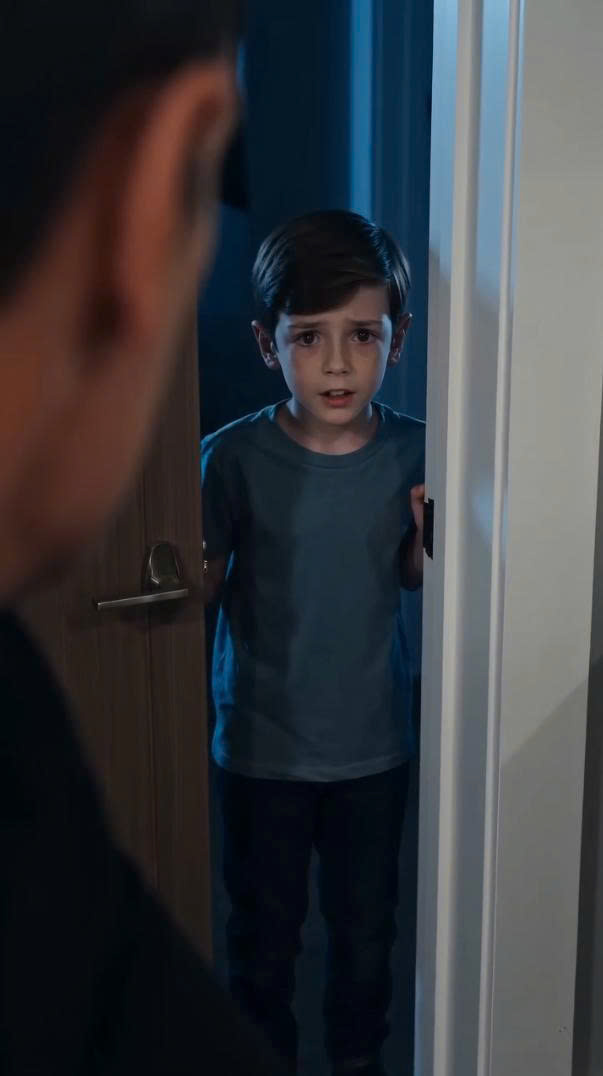 me is Daniel Whitmore, and before that Thursday night, I believed the worst thing that had ever happened to my family was the accident that killed my first wife, Emily. Emily was thirty-one years old and seven months pregnant when her car left a rain-slicked road outside Greenwich eight years earlier.
She survived long enough for doctors to deliver Noah by emergency cesarean section. He weighed barely three pounds.
I sat beside an incubator mourning my wife while praying our son would survive the night. He did.
Emily didn’t. For years, I treated Noah’s survival as the one mercy hidden inside the worst day of my life.
I never questioned whether he was mine. Why would I?
Emily and I had been married six years. We had been trying for a baby.
When she told me she was pregnant, I cried harder than she did. I signed Noah’s birth certificate, slept beside his incubator, took him home six weeks later, and spent the next several years learning how to be two parents while still grieving one.
Biology never entered my mind. Vanessa entered our lives when Noah was four.
She was polished, calm, and extraordinarily good at understanding what grief does to ordinary routines. She told me she had lost her husband, Michael Pierce, several years earlier and was raising three children alone.
That shared experience drew us together. I believed she understood what it meant to carry a dead spouse into a new relationship without making the new spouse compete with a ghost.
Mason was nine then, Claire six, Tyler three. Noah adored having siblings.
For the first year, our blended family looked almost embarrassingly happy. Sunday pancakes.
School concerts. Movie nights where five people argued for twenty minutes before choosing a film nobody watched.
Vanessa was affectionate toward Noah in front of me. She attended parent conferences, packed lunches, and once spent an entire afternoon helping him build a cardboard solar system.
I married her believing I had somehow been given another chance at family. The changes were small enough that I missed them.
Noah began losing weight that I blamed on a growth spurt. He stopped asking for seconds at dinner.
When I traveled to Manhattan or Boston for work, he called less. Vanessa said he was becoming independent.
Once I came home and found him eating crackers in his room after midnight. Vanessa told me he had refused dinner because he wanted pizza instead.
I lectured him about wasting food. He apologized so intensely that I should have realized something was wrong.
Instead, I kissed his forehead and went to bed. That is the memory I hate most, because I know now he had been hungry.
Vanessa had discovered that food was an effective way to control him because hunger made him quiet. Whenever Noah asked about something he had overheard, challenged one of her rules, or mentioned Michael Pierce, dinner became uncertain.
She rarely denied him food in ways outsiders could see. She would say he had already eaten.
She would tell the housekeeper he was sick. She would send him upstairs before dinner and later claim he had refused to come down.
By the time I walked into that kitchen early, Noah had learned not to contradict her. When I opened the DNA folder, none of that history was clear yet.
All I knew was that my son appeared on a genetic report beside Vanessa’s three children and that the laboratory classified them as sharing a biological father. I read the page again because the words seemed impossible.
“This is wrong,” I said. Vanessa’s face told me it wasn’t.
“Daniel, not in front of the children.” “You ordered DNA tests on my son.”
“I can explain.” “Then explain.”
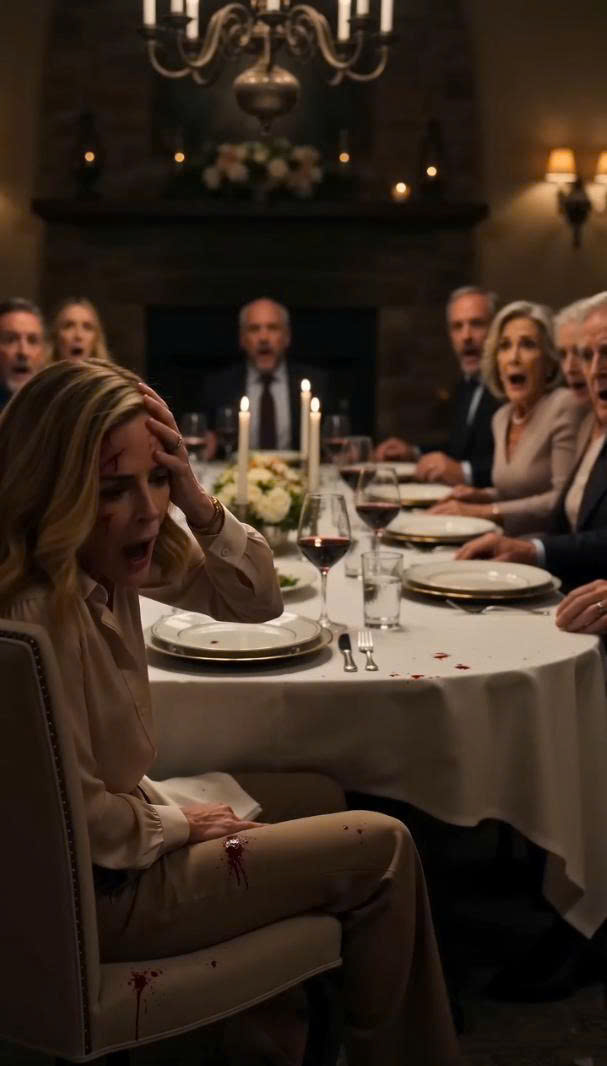
Mason began crying. Claire stared at her mother.
Tyler was too young to understand why everyone had stopped eating. Noah remained beside me, his fork frozen above the plate.
I closed the folder. “Mason, take Claire and Tyler upstairs.”
Mason didn’t move. He was looking at the second phone.
“Mom said Dad was dead.” Vanessa snapped, “Upstairs.
Now.” Mason looked at me instead.
“She talks to him.” Vanessa went completely still.
“How do you know?” I asked.
“I found the phone before.” “Mason.”
“She told me never to touch it.” His voice shook.
“There are pictures.” I picked up the phone.
Vanessa reached for it. I moved away.
“Give me that.” “No.”
“It’s mine.” “So is this house, and apparently I don’t know who has been calling it.”
The phone was locked. Noah whispered, “Six-four-one-nine.”
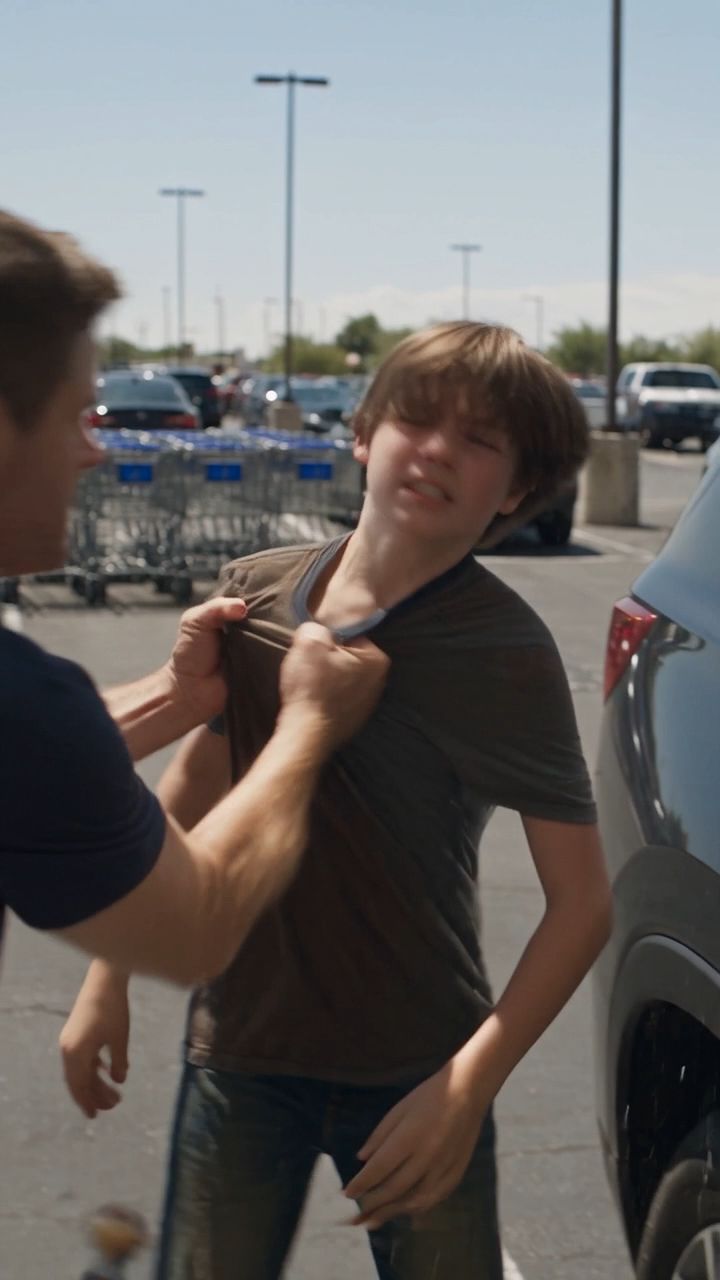
Vanessa turned on him so quickly that he flinched. I saw it.
“How do you know the code?” “I saw her.”
“You little—” “Finish that sentence,” I said. Vanessa stopped.
I entered the numbers. The phone opened.
The most recent contact was saved simply as M. There were dozens of calls.
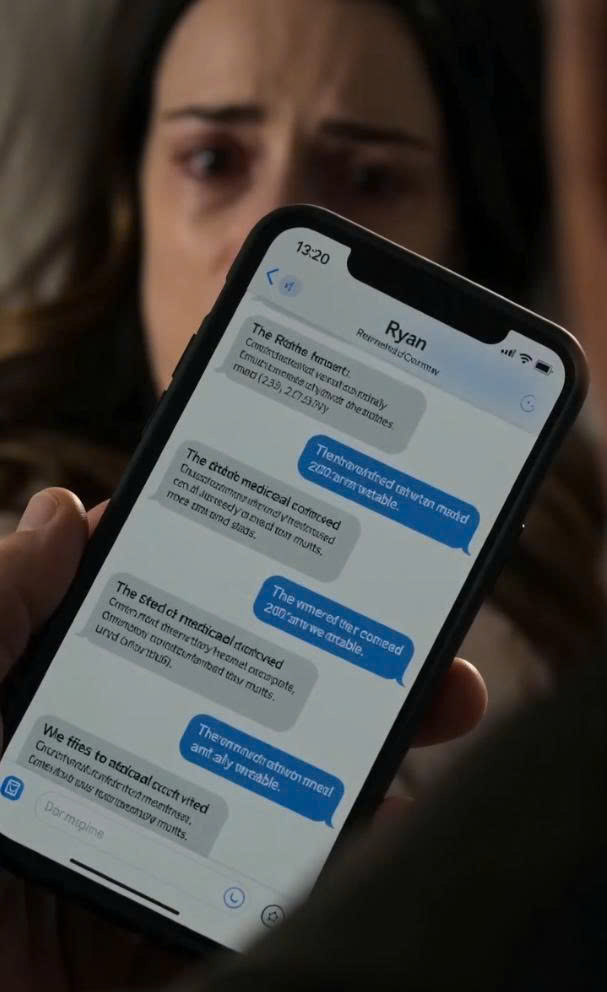
Messages too. The newest had arrived that afternoon: HE’S ASKING TOO MANY QUESTIONS.
KEEP THE BOY AWAY FROM THE PHONE. Another from three days earlier read: YOU SAID THE TEST WAS CERTAIN.
Vanessa had replied: ALL THREE MATCH. HE’S YOURS.
My hands began shaking. I scrolled further.
M had written: DOES DANIEL KNOW? Vanessa: NO.
AND HE NEVER WILL IF YOU STOP CALLING HERE. M: I WANT TO SEE HIM.
Vanessa: ABSOLUTELY NOT. M: HE IS MY SON TOO.
I sat down because my legs suddenly felt unreliable. Noah looked at me.
“Daddy?” I put the phone face down.
Whatever that report meant, whatever Emily had done or not done, the frightened child beside me was still the same boy whose first breath I had watched through hospital glass. “You’re okay,” I told him.
I don’t know whether I was speaking to him or myself. I sent all four children upstairs together and told Mason to stay with the younger ones.
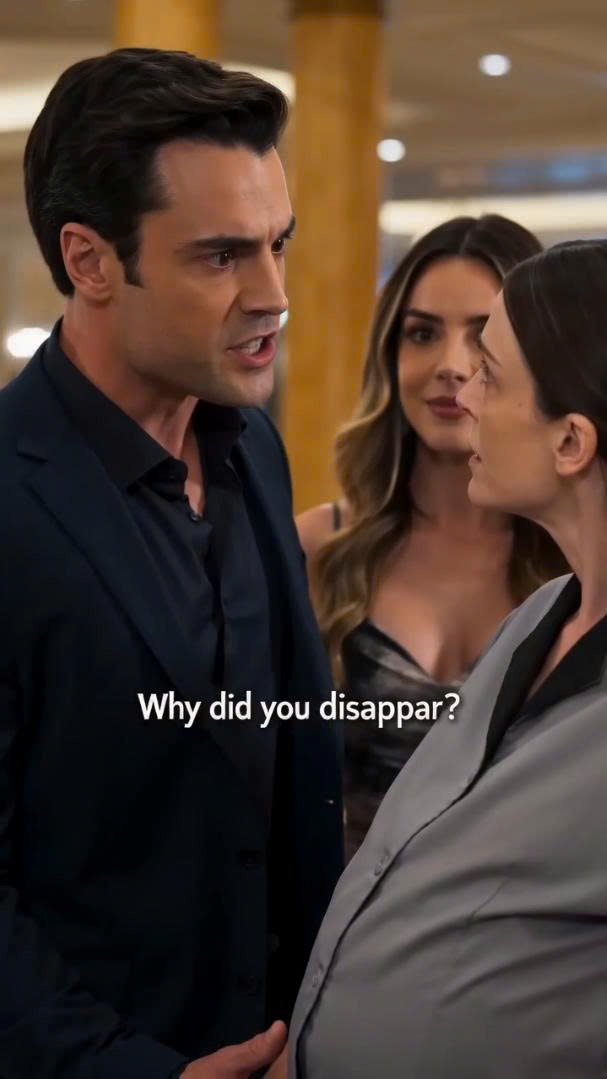
Then I returned to the kitchen. “Is Michael alive?”
Vanessa whispered, “Yes.” It was the first truth.
“For how long?” “He never died.”
“You told me your husband died.” “We were separated.”
“You told my son your children’s father was dead.” “Because in every way that mattered, he was gone.”
“Where is he?” “I don’t know exactly.”
I held up the phone. “You spoke yesterday.”
“He moves around.” “Who is Noah’s biological father?”
Vanessa began to cry. “Daniel, please.”
“Say it.” “Michael.”
The room became strangely quiet. I could hear the refrigerator motor.
Ranger’s collar when he shifted on the floor. Rain beginning against the windows.
“How do you know?” “The tests.”
“Why did you test them?” Vanessa wiped her face.
“Because Michael told me.” “Told you what?”
“That he knew Emily.” Hearing my dead wife’s name in Vanessa’s mouth made something inside me tighten.
“How?” “They had a relationship.”
I almost laughed because the alternative was breaking something. “No.”
“I’m sorry.” “You don’t get to be sorry yet.
You explain.” According to Vanessa, Michael had contacted her eighteen months earlier after disappearing from their lives for years.
He wanted money. Their divorce had never been properly finalized because he had vanished while facing debts, and Vanessa had allowed people—including me—to believe he was dead because explaining the truth felt humiliating and complicated.
He had been living under variations of his middle name and moving between New York, New Jersey, and Rhode Island. During one drunken call, he told Vanessa he had once been involved with a married woman named Emily Carter Whitmore.
My wife. He claimed the relationship ended shortly before her death.
He also said she had been pregnant with a child he believed might be his. At first Vanessa thought he was lying to manipulate her.
Then she looked up photographs of Emily online. She found old charity photographs from my company, newspaper articles about the accident, and Noah’s birth announcement.
Michael saw a picture of Noah and became convinced. Vanessa did not tell me.
She secretly took a DNA sample from Noah’s toothbrush and compared it with Mason. The laboratory reported a strong likelihood of a half-sibling relationship.
She repeated the test with Claire. Then Tyler.
Then a fourth confirmation through another laboratory because, she said, she “needed certainty.” “And when you got certainty?”
I asked. “I panicked.”
“So you stopped feeding him?” “That is not what happened.”
I stared at her. “He hasn’t eaten since breakfast.”
“Today got out of control.” “He eats bread from the pantry after you go upstairs.”
Her expression shifted. She hadn’t known I knew that, because until an hour earlier, I hadn’t.
“How often?” “Daniel—” “HOW OFTEN?”
Ranger jumped at my voice. I immediately lowered it because the children were upstairs.
Vanessa whispered, “Sometimes I sent him away from dinner when he was disrespectful.” “What did he do?”
“He listened outside doors. He touched things that weren’t his.
He kept asking about Michael.” There it was.
The cruelty had a purpose. Noah had overheard phone calls.
He had seen the name Michael on the second phone. Once, according to Vanessa, he walked into the study while she was video-calling him.
She told Noah it was a business call. Noah recognized the man later from an old photograph Mason kept hidden in his room.
When Noah asked why Vanessa was talking to Mason’s dead father, she terrified him into silence. She told him I would be furious if he accused her of lying.
She told him I might send him to live with his grandparents if he caused problems in our new family. When he kept asking, she began withholding privileges.
Then meals. “You starved a seven-year-old because he knew your supposedly dead husband was alive.”
“I did not starve him.” “He stood in his own kitchen begging for rice.”
Vanessa covered her face. “I was trying to keep everything from exploding.”
“Everything has already exploded.” I asked the question I was afraid to ask.
“What does Michael have to do with Emily’s accident?” Vanessa looked toward the drawer.
I followed her eyes. Beneath the DNA folder were envelopes and bank statements I had barely noticed.
Several showed transfers from an account Vanessa and I used for household expenses to a consulting company called MP Holdings. The amounts varied.
Five thousand. Eight thousand.
Twelve thousand. Nearly ninety thousand dollars over fourteen months.
I opened the oldest envelope. Inside was a photocopy of a police report from the night Emily died.
One line had been highlighted: Witness reported a dark-colored SUV traveling closely behind victim vehicle approximately two miles before crash. I looked at Vanessa.
“Was that Michael?” She sat down.
“He says yes.” I felt the air leave my lungs.
“He was there?” “He says he was following her.”
“Why?” “They had argued.”
I pulled out another sheet. It was a printout of messages between Vanessa and Michael.
In one, she had written: YOU LEFT HER THERE. He responded: I DIDN’T KNOW SHE WENT OFF THE ROAD UNTIL LATER.
Vanessa: YOU WERE CHASING HER. Michael: I WAS FOLLOWING.
NOT CHASING. Vanessa: YOU LET DANIEL THINK SHE WAS ALONE.
Michael: AND YOU’RE GOING TO TELL HIM WHAT? THAT HIS DEAD WIFE WAS CARRYING MY KID?
My hands went numb. Emily’s accident had never been explained.
It happened at night during heavy rain. Investigators found no mechanical failure.
A witness remembered another vehicle nearby but could not provide a license plate. We were told Emily probably lost control.
I had accepted that because grief eventually forces you to accept incomplete answers or drown inside them. Now a man I had never met was claiming he had been directly behind her after an argument.
“Why are you paying him?” I asked.
Vanessa’s voice was barely audible. “At first because he threatened to contact the children.”
“His children.” “He abandoned them.”
“That doesn’t answer me.” She admitted Michael had been demanding money in exchange for remaining away.
After the DNA test, his leverage changed. He threatened to tell me about Noah and Emily.
More importantly, he threatened to tell police that Vanessa had known for months he was connected to Emily’s last drive and had concealed his location. “Why would that matter to you if you had nothing to do with the crash?”
Vanessa stared at the table. “Because I knew more than I told you.”
“When?” “Before we got married.”
That was the moment the betrayal became larger than Michael. Vanessa had not learned everything eighteen months earlier.
She had recognized Emily’s name years before. After Michael disappeared, Vanessa found old emails between him and a woman named Emily.
She did not know the woman’s married surname initially. Then, several months after Vanessa and I started dating, she visited my house and saw a photograph of Emily on the mantel.
She recognized her. “You knew Michael had been involved with my wife before you married me?”
“I suspected.” “Did you know he had been there the night she died?”
“Not then.” “But you knew enough to say nothing.”
“What was I supposed to say? ‘Hi, Daniel, the dead husband I told you about may have slept with your dead wife’?”
“The husband you lied about being dead.” Vanessa began crying again.
“I loved you.” “Do not use that word right now.”
She flinched. I took the second phone and DNA documents into my study and called my attorney, then the police department in the jurisdiction where Emily’s crash occurred.
Because the matter involved an old fatal accident and potential evidence that another driver had been present, they asked me not to contact Michael myself. That was good advice, because I wanted nothing more than to hear his voice and ask whether he had watched my wife leave the road.
Instead, investigators took copies of the messages, bank records, DNA reports, and the second phone. I also called our pediatrician.
Noah needed to be examined. By midnight, all four children were staying with my sister Anne.
I did not separate Noah from Vanessa’s children. Whatever the adults had done, Mason, Claire, and Tyler had done nothing wrong, and the DNA report had suddenly made their relationship to Noah more complicated, not less.
At Anne’s house, Mason came to me after the younger children were asleep. “Is Noah my brother?” he asked.
I sat beside him on the porch. “You were brothers before tonight.”
“You know what I mean.” Twelve-year-olds understand more than adults want them to.
“The DNA report says you share a biological father.” Mason looked toward the window where Noah was sleeping.
“So Dad is his dad?” “Biologically, probably.”
“Does that mean you’re not Noah’s dad?” There it was.
The question that had been silently stalking me since I opened the folder. I answered before fear could complicate it.
“No. It means biology turned out to be different from what I believed.
I’m still Noah’s father.” Mason nodded.
“Good.” “Why?”
“Because Michael isn’t a dad.” I asked what he meant.
Mason told me he remembered Michael better than Vanessa realized. Michael had been unpredictable before he vanished—loving one week, gone the next, angry when he lost money.
Vanessa had told the children he died because it was easier than explaining why he never came back. Mason had secretly kept one photograph.
Several months earlier, he discovered Vanessa speaking to Michael on the second phone. She made him promise not to tell Claire or Tyler.
“Did you hear what they discussed?” “Money.
And Noah.” “What about Noah?”
Mason hesitated. “Dad said he wanted to meet him.
Mom said no because you would find out about Emily.” My chest tightened.
“Anything else?” “Once he said, ‘I never meant for her to crash.’” That sentence became crucial.
Police obtained records associated with Michael’s current phone and eventually located him in Providence, Rhode Island, living under his middle name, James Pierce. He was fifty years old, working irregular construction jobs, and very much alive.
When detectives first questioned him, he denied involvement in Emily’s accident. Then they showed him the messages.
His story changed. Michael admitted he and Emily had an affair lasting several months.
They met through a commercial real-estate project my company was involved with. I had traveled frequently then.
Emily had been lonely. None of that excused the affair, but years later I came to understand that understanding is not the same as forgiving.
Emily ended the relationship shortly before learning she was pregnant. She told Michael the baby was mine and demanded he leave her alone.
Michael did not believe her. On the night of the accident, he asked her to meet him at a café in Stamford.
He wanted proof of paternity after the baby was born. Emily refused.
They argued in the parking lot. She drove away.
Michael followed. He claimed he wanted to continue talking.
Witnesses remembered a dark SUV following too closely. Michael admitted he flashed his headlights and accelerated several times trying to make Emily pull over.
On a curve slick with rain, Emily’s car left the road. Michael did not see the crash clearly.
He realized her taillights had disappeared, slowed down, then panicked. Instead of turning around, he drove away.
Another motorist found Emily’s vehicle almost twenty minutes later. I asked the detective whether those twenty minutes killed her.
He could not tell me. Doctors had documented catastrophic injuries.
She might have died regardless. That uncertainty was almost worse than certainty.
Michael had not intentionally run her off the road according to the evidence investigators ultimately found. There was no proof his vehicle struck hers.
But he had followed her aggressively, failed to stop after losing sight of her, and then concealed his presence for eight years. The reopened investigation became complicated by the age of the case, unavailable physical evidence, and what could actually be proven rather than what everyone suspected.
I learned very quickly that real justice rarely looks like television. Detectives do not turn grief into certainty simply because a story feels obvious.
Prosecutors review statutes, evidence, timelines, and what a jury could reasonably conclude. Michael faced legal consequences relating to his conduct and later financial matters, but there was never a dramatic murder conviction.
I had to learn to live with the distinction between knowing a man behaved terribly and being able to prove every consequence of that behavior beyond reasonable doubt. The paternity question was easier.
A court-approved test confirmed Michael Pierce was Noah’s biological father. I received the result in my attorney’s office.
I read the page once and placed it down. My attorney asked whether I needed a moment.
“No.” “Daniel, this could affect certain legal issues.”
“Maybe.” “How are you feeling?”
I thought about Noah weighing three pounds in an incubator. Noah learning to walk while holding my index fingers.
Noah calling me from school because he had forgotten his lunch. Noah standing in our kitchen afraid to ask another adult for rice.
“I’m his father.” My attorney nodded.
“I understand.” “No.
I need everyone else to understand.” Whatever rights or claims Michael might try to pursue biologically, I was not abandoning my son because a laboratory had corrected the story of his conception.
When I finally told Noah the truth, I used words recommended by a child therapist. I explained that families can have biological parents and parents who raise us, and that we had recently learned another man helped create him biologically.
Noah stared at me for several seconds. “So you’re not my real dad?”
My throat tightened. “I’m your real dad.
Michael is your biological father.” “Are you going away?”
“No.” “Do I have to go with him?”
“No.” “Do you still want me?”
I pulled him into my arms. “There has never been one second of your life when I didn’t want you.”
He started crying. “Vanessa said if you found out, you wouldn’t.”
That sentence nearly destroyed whatever remained of my marriage. Vanessa had not only deprived him of food.
She had been preparing him for abandonment. When he overheard Michael’s name and asked questions, she told him there were secrets that could make me “see him differently.”
She said if I learned the truth, I might decide Noah belonged somewhere else. Hunger made him obedient; fear made him silent.
A seven-year-old had been carrying the belief that one wrong sentence could cost him his father. Child welfare investigators became involved because of the food deprivation.
The housekeeper, Maria, was devastated when she learned what had happened. She provided text messages showing Vanessa repeatedly told her Noah had already eaten, was sick, or was staying with friends when he was actually upstairs.
Maria also remembered finding bread wrappers beneath Noah’s bed. She had assumed he was sneaking snacks.
The pediatric examination showed he was underweight compared with previous growth records, though thankfully not dangerously malnourished. His therapist documented anxiety around meals and a habit of asking whether food was “for everybody” before eating.
Vanessa initially minimized everything. Then Mason spoke.
He told investigators he had seen his mother send Noah upstairs without dinner several times. Claire remembered leaving half a sandwich outside Noah’s bedroom because she knew he was hungry.
Tyler remembered Vanessa telling them, “Noah has different rules.” None of Vanessa’s children had understood the full cruelty.
They were children adapting to the reality an adult created around them. That mattered to me because I refused to let Noah turn his new biological siblings into villains.
The next discovery came from the bank statements. Vanessa had paid Michael nearly ninety thousand dollars from marital funds.
She described the payments as blackmail. Michael described them as support she owed him.
Investigators found both explanations partly true and partly self-serving. He had threatened to expose her lies.
She had also paid him to remain away because his return could reveal that she had falsely presented herself as widowed, concealed her contact with a man connected to Emily’s death, and secretly tested Noah. My attorneys traced additional payments Vanessa had made from an investment account without telling me.
Money mattered in the divorce, but by then I cared far more about custody and the children. Vanessa moved out under a temporary arrangement.
Mason, Claire, and Tyler remained in regular contact with her because she was their mother, but independent evaluations became part of determining how parenting time would work. Noah wanted nothing to do with her.
I did not force him. Vanessa wrote him several apology letters.
His therapist kept them until he was ready. For months, he refused even to hear her name.
The strangest part was watching the four children adjust to knowing they were biologically connected through Michael. Mason became fiercely protective of Noah.
One morning I found him packing two sandwiches into Noah’s school bag. “He already has lunch,” I said.
Mason shrugged. “Extra.”
Neither of us needed to explain. Claire began insisting everyone sit together at dinner.
Tyler simply accepted the situation the way six-year-olds accept astonishing things. “So Noah is extra my brother now?” he asked.
“Something like that.” “Cool.”
Noah smiled for the first time that week. Michael eventually requested contact.
I opposed any immediate meeting. Professionals evaluated the situation, and because Noah was young, frightened, and had only recently learned the truth, nobody forced an instant reunion.
Months later, after therapy and careful preparation, Noah agreed to a supervised meeting. I sat in the building but not in the room.
I expected jealousy. What I felt instead was fear.
Not fear that Noah would love Michael. Children have room to love more than one person.
I feared Michael would destabilize a child whose entire sense of family had already been attacked. The meeting lasted forty-five minutes.
When Noah came out, he walked directly toward me and took my hand. “He looks like me,” he said.
“I know.” “He cried.”
“Okay.” “He said he’s sorry.”
“How do you feel?” Noah thought about it.
“Hungry.” I laughed so suddenly I almost cried.
“Let’s get dinner.” We went to a diner.
Noah ordered pancakes at six in the evening because I had stopped caring about the rules governing appropriate pancake hours. Halfway through eating, he asked, “If Michael made me, what did you do?”
I looked at him. “What do you mean?”
“He said he’s my biological father because he helped make me.” I smiled.
“Then I guess I did everything after that.” Noah considered the answer and nodded.
“That’s more stuff.” “A lot more.”
“So you’re more Dad.” I reached across the table and squeezed his hand.
“I’ll take it.” My marriage to Vanessa ended.
There was no reconciliation scene. No moment when one apology repaired what she had done.
During mediation she finally admitted that once the DNA results confirmed Michael was Noah’s biological father, she began resenting Noah as a living threat to everything she had built. Every time she looked at him, she saw Michael, Emily, and the possibility that I would discover she had lied before our marriage.
She told herself Noah was nosy, manipulative, disobedient. Those labels made each punishment easier.
Eventually she had convinced herself withholding meals was discipline rather than cruelty. “I needed him to stop asking questions,” she said.
“He was seven,” I answered. “I know.”
“You were afraid of a seven-year-old.” Vanessa cried.
“I was afraid of what he knew.” That was the closest she ever came to explaining it honestly.
The court addressed the financial deception in our divorce settlement. Child-welfare findings shaped the boundaries involving Noah.
Michael dealt separately with investigators regarding Emily’s crash, his years of concealment, and financial issues connected to the money he received. The outcome was messier and less emotionally satisfying than revenge stories usually promise.
Nobody was led away from our house in handcuffs while dramatic music played. Instead there were attorneys, interviews, supervised visits, financial audits, therapy sessions, court dates, and months of children asking questions adults could barely answer.
But consequences do not have to be cinematic to be real. Vanessa lost her marriage and unrestricted access to the child she had mistreated.
Michael had to face an accident he had spent years pretending he had nothing to do with. And I had to face my own failure.
I had been so grateful to Vanessa for helping me build a second family that I ignored changes in my son because investigating them would have threatened the life I wanted to believe we had. I apologized to Noah.
Not once. Many times.
“I should have noticed.” He would usually shrug because seven-year-olds do not know what to do with adult guilt.
A therapist eventually told me to stop making Noah responsible for reassuring me. So I changed the apology into action.
I reduced my travel. I ate breakfast with him every morning I could.
We created one rule at dinner: nobody had to earn a place at the table. Children could misbehave and still eat.
They could argue and still eat. They could be angry and still eat.
Food was food, not approval. The first few weeks, Noah always waited until everyone else had been served before taking anything.
Eventually he stopped. Six months later, I came home late from work and found all four children in the kitchen.
Mason was making grilled cheese badly. Claire was cutting apples.
Tyler was feeding cheese to Ranger under the table. Noah sat on the counter eating directly from a bag of crackers.
“What is happening?” I asked.
Mason looked guilty. “Dinner?”
I laughed. “Apparently.”
Noah held out the crackers. “Want some?”
I took one. The simple abundance of that moment hurt in a way I cannot describe.
Nobody was counting portions. Nobody was waiting to see whether he was allowed to eat.
A year after the DNA report, we visited Emily’s grave on the anniversary of her death. I had avoided discussing the affair with Noah because he was too young to carry the moral failures of adults.
I told him only that his mother loved him, that adults sometimes make complicated mistakes, and that nothing about how he was conceived changed how wanted he had been once he arrived. That was true for me.
I cannot know exactly what Emily felt in those final months. I wish she had told me.
I wish she had trusted me enough to face whatever came next together. I was angry with her for a long time after learning the truth.
Grief had preserved her as someone flawless because dead people cannot argue with the stories we build around them. Discovering the affair forced me to mourn a real woman instead of an idealized one.
A woman who loved me, betrayed me, made mistakes, became afraid, and died before she could explain any of them. At the cemetery, Noah placed a small white flower beside her stone.
“Do you think she knew I’d live?” he asked. “I don’t know.”
“I’m glad I did.” I swallowed.
“Me too.” He took my hand.
“Even though Michael is my biological dad?” “Especially because you’re you.”
On the drive home, Noah fell asleep against the window. In the rearview mirror, I could see Mason beside him, earbuds in, and Claire arguing quietly with Tyler over a game.
Four children connected by a man who had failed all of them in different ways, being driven home by a man biologically related to none of Vanessa’s three and, as it turned out, not biologically related to Noah either. Yet they were still my family.
That may have been the final lesson hidden inside the DNA folder. Blood can reveal truth.
It can identify relationships. It can reopen old crimes and expose lies people thought were buried.
But blood cannot decide who showed up. Michael Pierce gave Noah half his DNA.
I gave Noah bottles at three in the morning. I held him through fevers.
I watched his first steps. I taught him to ride a bicycle.
I knew he hated mushrooms, feared thunderstorms, and pretended not to cry during sad movies. When Vanessa tried to make him feel like an outsider, I was the person whose failure to notice had hurt him—and therefore the person responsible for making sure it never happened again.
Two years later, Noah is nine. He still sometimes hides snacks in his bedroom.
His therapist says habits created by scarcity can take a long time to disappear. I do not punish him.
Once a week we empty the drawer together and replace anything stale. He now jokes that it is his “emergency cracker reserve.”
Mason is fourteen and spends alternating weeks with Vanessa under the arrangement established after the divorce. Claire and Tyler do the same.
They remain part of Noah’s life. Michael has limited, structured contact when Noah chooses it.
I do not know what their relationship will become. That decision will increasingly belong to Noah as he grows older.
As for the kitchen drawer where I found the tests, I eventually removed it during a renovation. The carpenter asked whether it was damaged.
“Something like that,” I said. In its place we installed a deeper drawer for school lunch containers.
Every morning, Noah opens it without asking permission. Sometimes I watch him pack his own lunch.
Sandwich. Apple.
Too many cookies when he thinks I am not looking. The boy who once stood beside that kitchen doorway wondering whether there would be enough rice now complains when I buy the wrong cereal.
It is the most ordinary thing in the world. And after everything that happened, ordinary feels like victory.
Vanessa thought Noah was dangerous because he knew too much. She believed if she kept him hungry, frightened, and quiet, an adult secret could remain buried.
She was wrong. The secret was not exposed because Noah understood DNA or adultery or old police reports.
It was exposed because one evening a seven-year-old boy was hungry enough to ask for dinner in his own home, and his father came home early enough to hear the answer.